

Showing 121 - 140 of 141 results
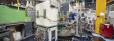
Kowari - Strain Scanner
Kowari, a residual stress diffractometer, can be used for ‘strain scanning’ of large engineering components as large as 1000 kilograms.

Masters of Design Student - Swinburne University
Terry has studied in Singapore and Australia, focusing on teaching design. He is passionate about cross-cultural interactive learning and design research to inspire new and innovative concepts.

Access to information

Nanoprobe beamline (NANO) - under construction
The BRIGHT Nanoprobe beamline provides a unique facility capable of spectroscopic and full-field imaging. NANO will undertake high-resolution elemental mapping and ptychographic coherent diffraction imaging. Elemental mapping and XANES studies (after DCM upgrade) will be possible at sub-100 nm resolution, with structural features able to be studied down to 15 nm using ptychography.
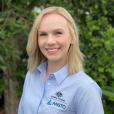
Consultant Health Physicist, Radiation Services
As a Consultant Health Physicist within ANSTO’s Radiation Services team, Bronte brings her experience in the field of radiation detection and protection to support the development and delivery of complex programs in a commercially focu
ANSTO hosts IAEA Pacific Isotope Hydrology Training Workshop
ANSTO hosted an international training workshop on Pacific isotope hydrology at its Lucas Heights facility in Sydney from 16 - 20 March 2026, bringing together experts and water resource practitioners from across the Pacific and partner organisations.
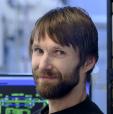
Physicist Accelerator Scientist
Dr Klaus Wilcken is an accelerator mass spectrometry scientist at the Centre for Accelerator Science (CAS) with over 12 years of experience with suite of AMS isotopes & techniques.
Research supports potential local supply chain for component in COVID PCR test
University of Melbourne researchers have investigated a method to produce magnetic nanoparticles in Australia for use in COVID-19 PCR tests.
Feathery moa’s fossilised footprints, ancient age revealed
ANSTO scientist, Dr Klaus Wilcken of the Centre for Accelerator Science, used cosmogenic nuclide dating to determine the ages of layered sand and gravel samples, in which seven footprints of the flightless bird, the moa, were found on the South Island in New Zealand in 2019.

Visit our Sydney facilities
ANSTO's Sydney locations are home to the Open Pool Australian Light-water (OPAL) multi-purpose reactor, the Centre for Accelerator Science (CAS), the Australian Centre for Neutron Scattering, the National Research Cyclotron and the National Deuteration Facility.
Showcasing ANSTO's Innovative Technologies at Phoenix's Waste Management Symposia
ANSTO is taking its innovative ANSTO Synroc® and CORIS360® technologies to the world stage at the Waste Management Symposia 2024 in Phoenix, Arizona USA this week (10 – 14 March 2024). Joining over 45 other countries and around 3,000 attendees, an Australian Government contingent comprising of ANSTO and the Australian Radioactive Waste Agency is in attendance to showcase Australia’s extensive radioactive waste management capabilities.
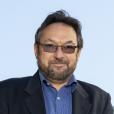
Lead, Food Materials Science; Instrument Scientist, QUOKKA (Small-Angle Neutron Scattering); Honorary Professor, CNFS, The University of Queensland
Role at ANSTO
Australia leads progress in agriculture project in Asia and the Pacific
Australia is leading an agriculture project in the Asia and Pacific region, in partnership with the International Atomic Energy Agency (IAEA) and the Regional Cooperative Agreement for Research, Development and Training Related to Nuclear Science and Technology for Asia and the Pacific (RCA) to progress Atoms4Food.
Fine particle pollution peaks during bushfires
Recent catastrophic Australian bushfires produced extremely high levels of fine particle pollution.

Research Program Manager
Role at ANSTO
Aimed at the delegated Radiation Safety Officer responsible for radioactive substances and/or radiation apparatus in an industrial setting.
Sydney
Learn how the Australian Synchrotron combines science and technology to produce cutting edge research.
Melbourne
Beamtime Guide - XFM
Beamtime Guide on the X-ray Fluorescence Microscopy beamline at the Australian Synchrotron.

Food processing and development
Research can improve both food processing and food product development.