ANSTO recognises scientific achievement, leadership, external collaboration and outreach at Awards event
ANSTO recognised the contribution of individuals and teams to nuclear science and technology at the 2023 ANSTO Awards Ceremony held on 25 July.


Showing 121 - 140 of 140 results
ANSTO recognised the contribution of individuals and teams to nuclear science and technology at the 2023 ANSTO Awards Ceremony held on 25 July.

Your students can analyse real research data from ANSTO scientists.



Archive of ANSTO research publications, seminars and short talks.


Publications and resources from the Powder Diffraction beamline.
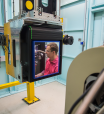
The High Performance Macromolecular Crystallography beamline will enable the study of very small (sub-5 micrometre) or weakly diffracting crystals, providing a state-of-the-art high-throughput facility for researchers. MX3 will be able to study the structures of large proteins and protein complexes for virology, drug design and industrial applications via goniometer mounted crystals, in-tray screening, or via serial crystallography methods.
Study helps make carbon dating a more accurate chronological tool.

The Advanced Diffraction and Scattering beamlines (ADS-1 and ADS-2) are two independently operating, experimentally flexible beamlines that will use high-energy X-ray diffraction and imaging to characterise the structures of new materials and minerals.

Highlights of the Energy Materials Project.

Research can improve both food processing and food product development.


The Medium Energy- X-ray Absorption Spectroscopy beamlines provides access to XANES and EXAFS data from a bending magnet source, optimised for cutting-edge applications in biological, agricultural and environmental science in an energy range that is not currently available at the Australia Synchrotron.

The Infrared microspectroscopy microscopes can record spectra from a range of different samples; from thin microtomed sections to polished blocks and embedded particles. This section highlights the types of samples that can be analysed using the IRM beamline

Highlights of the Magnetism Project.