
Connect with ANSTO's Women in STEM
Read about an ANSTO scientist and their work to prepare for a school project or interview.


Showing 41 - 60 of 538 results
Read about an ANSTO scientist and their work to prepare for a school project or interview.

ANSTO has been tracking and publishing data on fine particle pollution from key sites around Australia, and internationally, for more than 20 years.


The Medium Energy- X-ray Absorption Spectroscopy beamlines will provide access to XANES and EXAFS data from a bending magnet source, optimised for cutting-edge applications in biological, agricultural and environmental science in an energy range that is not currently available at the Australia Synchrotron.
The role of trace elements as palaeoclimate proxies has been explored in ANSTO-led collaborative environmental research.

The Advanced Diffraction and Scattering beamlines (ADS-1 and ADS-2) are two independently operating, experimentally flexible beamlines that will use high-energy X-ray diffraction and imaging to characterise the structures of new materials and minerals.

This program explores the mechanism and outcome of the interaction of radiation on biological systems in order to improve our understanding of the impact of radiation on the brain, optimise radiotherapy and develop mitigation strategies for space travellers.
Frequently asked questions about ANSTO for the community.

Australian Nuclear Science and Technology Organisation (ANSTO) is committed to protecting your personal information in accordance with the Privacy Act 1988 (Cth) (Privacy Act) and the Australian Privacy Principles.

An initiative for National Science Week 2024 the Shorebirds Competition addresses the 2024 theme for National Science Week, ‘Species Survival’ and provides unique cross-curricula learning for Australian primary students in Years 3 to 6.


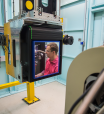
The High Performance Macromolecular Crystallography beamline will enable the study of very small (sub-5 micrometre) or weakly diffracting crystals, providing a state-of-the-art high-throughput facility for researchers. MX3 will be able to study the structures of large proteins and protein complexes for virology, drug design and industrial applications via goniometer mounted crystals, in-tray screening, or via serial crystallography methods.


ANSTO is seeking nominations for the ANSTO Australian Synchrotron Stephen Wilkins Thesis Medal.

Frequently asked questions about the ANSTO Security Process, travel funding, ANSTO Research Portal and ACNS Customer Portal.

Applications, recent results, publications.

ANSTO’s user office in Melbourne offers access to the Australian Synchrotron, a world-class research facility with over 4,000 user visits per year. ANSTO seeks collaboration and partnerships with research organisations, scientific users and commercial users.