Space research collaboration
ANSTO launches new area of space research in collaboration with the National Centre for Space Studies and the National Institute of Health and Medical research in France.


Showing 41 - 60 of 435 results
ANSTO launches new area of space research in collaboration with the National Centre for Space Studies and the National Institute of Health and Medical research in France.
PhD candidate Vienna Wong is using her FutureNow Scholarship to research ultra-high temperature ceramics, which are emerging materials for extreme environments.
The newly built Medicines Manufacturing Innovation Centre (MMIC), co-located at the Australian Synchrotron at Clayton, was officially opened on Wednesday by the Victorian Deputy Premier and Minister for Medical Research the Hon Ben Carroll.
ANSTO recognises the traditional indigenous owners of the land at all its sites and works to contribute to the recognition of the indigenous cultural heritage of Australia.
ANSTO and the User Meeting 2024 organising committee celebrate this years award recipients.
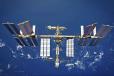
In space, without the protection of the magnetosphere, the type and dose of radiation is considerably different to what is naturally experienced on earth. However, it is the secondary particles of lower energies created when galactic and cosmic radiation interacts with shielding that is of concern for astronauts.
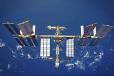
In collaboration with the French National Institute of Health and Medical Research (INSERM) and the French International Space Agency (CNES), ANSTO scientists are undertaking research on the radiobiological effects of secondary particles that are created when radiation interacts with the shielding on the International Space Station.
A team of Melbourne researchers and international partners from Italian Instituto Nazionale de Fisica Nucleare (INFN) and CERN, who are developing radiation-hardened semiconductor chips, used the unique state-of-art high energy ion microprobe on the SIRIUS ion accelerator at ANSTO’s Centre for Accelerator Science to test a prototype radiation-resistant computer chip
Atomic mechanism produces colossal cooling effect in new class of materials .
International study has revealed a clustering of charged particles in the microgravity environment of space,with implications for the development of materials and better drugs that depend on the mixing of two or more charged particles.
ANSTO’s own meteorite hunter, who is also a planetary scientist and instrument scientist Dr Helen Brand took part in an expedition led by Professor Andy Tomkins of Monash University that has found the largest meteorite strewn field in Australia since the famous Murchison meteorite event in 1969.

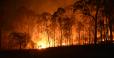
Bushfires heat soil to extreme temperatures and this causes oxidation of chromium to a highly toxic and carcinogenic form.
ANSTO’s Centre for Accelerator Science has been selected as a partner facility in RADNEXT 2030, a major European initiative that provides researchers and industry with access to radiation testing infrastructure for electronics.
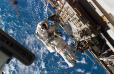
ANSTO has a range of capabilities and expertise to support aerospace and space research.