

Showing 121 - 140 of 149 results

Lead, Radiation Damage, Nuclear fuel Cycle
Role at ANSTO
New method PET radiotracers
Health researchers have developed a new method for producing PET radiotracers.

UM2022 Speakers

Imaging Neurophysiologist
Role at ANSTO
Bringing radiochemistry to life

Principal Scientist and Biology Group Leader
Role at ANSTO
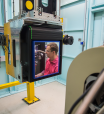
High Performance Macromolecular Crystallography Beamline (MX3)
The High Performance Macromolecular Crystallography beamline will enable the study of very small (sub-5 micrometre) or weakly diffracting crystals, providing a state-of-the-art high-throughput facility for researchers. MX3 will be able to study the structures of large proteins and protein complexes for virology, drug design and industrial applications via goniometer mounted crystals, in-tray screening, or via serial crystallography methods.
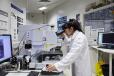
Infrared microspectroscopy
The Infrared Microspectroscopy beamline combines the high brilliance and collimation of the synchrotron beam through a Bruker V80v Fourier Transform Infrared (FTIR) spectrometer and into a Hyperion 3000 IR microscope to reach high signal-to-noise ratios at diffraction limited spatial resolutions between 3-8 μm.

Visitor Terms and Conditions
On behalf of ANSTO thank you for your interest in our tours. We hope your visit to ANSTO will be both enjoyable and informative.
What's new in nuclear power technologies
It's ANSTO's role to keep Australia across the very latest developments in nuclear science and technology from around the world. Part of this responsibility is keeping us abreast of the latest developments in nuclear power technologies.

Postdoctoral Research Fellow
Role at ANSTO

Board Member
Professor Lee is a Nuclear Medicine Physician at Austin Health in Melbourne, with extensive nuclear medicine expertise and is very highly regarded in the nuclear medicine community.

Illuminating Synchrotron Science!
Melbourne
Using cosmic ray 'clocks in rocks' to understand climate change
Bacteria research set to bolster antibiotic-resistant drug development
Publications
Publications and resources from the Powder Diffraction beamline.
ANSTO recognises scientific achievement, leadership, external collaboration and outreach at Awards event
ANSTO recognised the contribution of individuals and teams to nuclear science and technology at the 2023 ANSTO Awards Ceremony held on 25 July.
Archive
See details of previously published customer updates from our Health products team.

2025 Think Science Competition Summary and Results
Think Science! 2025 Summary and results