
Shorebirds Competition 2021
ANSTO is proud to host the Shorebirds Competition for the fourth year. This unique environmental poster competition is free to enter and offers over $4000 in prizes (insert link to prizes button) for students and schools!


Showing 21 - 40 of 364 results
ANSTO is proud to host the Shorebirds Competition for the fourth year. This unique environmental poster competition is free to enter and offers over $4000 in prizes (insert link to prizes button) for students and schools!
Using the Australian Synchrotron, an international team of researchers has characterised an important interaction that helps the SARS-CoV-2 virus invade human cells.
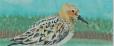
ANSTO is proud to host the Shorebirds Competition for the fifth year. This unique environmental poster competition is free to enter and offers over $4500 in prizes for students and schools!
PHD student Dr Leonie van ‘t Hag has been awarded the prestigious 2017 ANSTO, Australian Synchrotron Stephen Wilkins Medal for her PhD thesis.

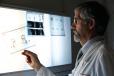
Osteoporosis is a major public health issue, and it has been estimated that total annual cost of osteoporosis/osteopenia in Australia is around $2,754 million.
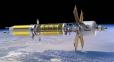
ANSTO researchers are investigating nuclear propulsion systems for applications on the sea and in space.

Ultra-flexible electronics has many potential applications within areas such as for example the military, healthcare and energy.
Potential new treatments and tools for depression under development.
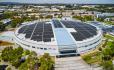
A world-class national research facility that uses accelerator technology to produce a powerful source of light-X rays and infrared radiation a million times brighter than the sun.

Synchrotron light is the electromagnetic radiation emitted when electrons, moving at velocities close to the speed of light, are forced to change direction under the action of a magnetic field.
ANSTO has safely managed its radioactive waste for over 60 years. Waste is managed in accordance with national and international standards.
Imperial College London researchers tapped into ancient geological data locked within precariously balanced rocks using a new technique to boost the precision of hazard estimates for large earthquakes.
Koala is one of the leading small-molecule crystallography instruments in the world for determining the complex crystal structure of a wide range of chemicals and minerals.