The page you requested does not exist. For your convenience, a search was performed below using the query whats on neutrons food 5.
International researchers have used nuclear techniques at ANSTO - a centre for food materials science - to develop a methodology that could assist in the design of oleogel systems for food applications.
Consumers want to know that the foods they consume provide health benefits. Food materials science can monitor changes during digestion as well as assist in the development of low-fat products.
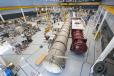
The Australian Centre for Neutron Scattering (ACNS) is a major research facility for neutron science that comprises a suite of neutron instruments with a range of techniques for scientific investigations in physics, chemistry, materials science, medicine and environmental science among other fields.
Research can improve both food processing and food product development.
Radioisotopes are widely used in medicine, industry, and scientific research. New applications for radioisotopes are constantly being developed.
ANSTO will be participating in a new Industrial Transformation Training Centre established and funded by the Australia Research Council to advance the use of bioactive ingredients in Australia.
The nuclear analysis team at ANSTO recently had a significant role in the re-design and optimisation of a cold neutron source facility for the reactor, its installation and the subsequent restart after a six-month shutdown.
The installation of a cold neutron source (CNS), a component that reduces the energy and speed of the neutrons from a research reactor for use in scientific instruments, was successfully completed in September 2024.
Neutron imaging or tomography creates a whole series of three-dimensional images of an object that can be reconstructed.
A lift for fish at Tallowa Dam: Study on dietary impacts.
ANSTO's unique capabilities are being used to develop a quick analytical tool to determine the geographic origin of seafood and authenticates quality.
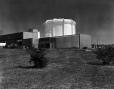
In April 15, 1953, Australia entered the nuclear science arena, when the Atomic Energy Act came into effect. The Australian Atomic Energy Commission (AAEC) followed and in 1987 the AAEC evolved into the Australian Nuclear Science and Technology Organisation (ANSTO) as it’s known today.
Scientists at ANSTO characterise structures with atomic detail using probes such as x-rays, electrons, neutrons and ions.
Understanding the molecular structure of ingredients can improve the qualities of food.
Deuteration and nuclear techniques can contribute to the science of beauty.
ANSTO has secured a $1.62 million Medical Research Future Fund (MRFF) grant under the Australian Brain Cancer Mission’s 2024 Brain Cancer Discovery and Translation program
ANSTO is one of the world's leading providers of irradiation services for silicon ingots, which are used by the multimillion dollar electronics industry across Europe and Asia. Each year, ANSTO irradiates more than 50 tonnes of silicon.
Pagination