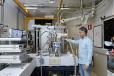
Australia’s Open Pool Australian Lightwater (OPAL) reactor is a state-of-the-art 20 megawatt multi-purpose reactor that uses low enriched uranium (LEU) fuel to achieve a range of activities to benefit human health, enable research to support a more sustainable environment and provide innovative solutions for industry.
Atomic structure of new cathode material for sodium ion batteries helps explain long life
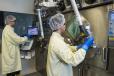
Designed for those working predominantly with unsealed radioactive sources, typically in a research, radiopharmaceutical or hospital environment. ANSTO is a recognised leader in radiation safety training, delivering industry and regulator-approved courses including S8, S10, S12 & S36.
Sydney
A selection of research highlights, instrument news and technical developments for scientists.
The THz/Far-IR Beamline couples the high brightness and collimation of a bend-magnet synchrotron radiation to a Bruker IFS125HR spectrometer providing high-resolution spectra (0.00096 cm-1) with signal to noise ratio superior to that of thermal sources up to 1350 cm-1 for gas-phase applications; the beamline also delivers signal to noise ratio superior to that of thermal sources up to 350 cm-1 for condensed phase samples.
View the upcoming proposal deadlines for access to ANSTO’s Research Portal. The User Office provides support for research proposals and enables you to leverage our world-class research infrastructure and facilities.
Sydney
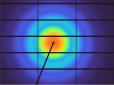
The Biological Small Angle X-ray Scattering beamline will be optimised for measuring small angle scattering of surfactants, nanoparticles, polymers, lipids, proteins and other biological macromolecules in solution. BioSAXS combines combine a state-of-the-art high-flux small angle scattering beamline with specialised in-line protein purification and preparation techniques for high-throughput protein analysis.
Principal Research Scientist
Role at ANSTO
The role of trace elements as palaeoclimate proxies has been explored in ANSTO-led collaborative environmental research.
See details of previously published customer updates from our Health products team.
The Advanced Diffraction and Scattering beamlines (ADS-1 and ADS-2) are two independently operating, experimentally flexible beamlines that will use high-energy X-ray diffraction and imaging to characterise the structures of new materials and minerals.
The Medium Energy- X-ray Absorption Spectroscopy beamlines provides access to XANES and EXAFS data from a bending magnet source, optimised for cutting-edge applications in biological, agricultural and environmental science in an energy range that is not currently available at the Australia Synchrotron.
Designed for Radiation Safety Officers working in industrial settings responsible for radioactive substances and/or radiation apparatus. ANSTO is a recognised leader in radiation safety training, delivering industry and regulator-approved courses for licences including IA7, IA8, IA10, IA12, IA19 & IA41.
Sydney
Sydney
Hydrogeochemist
Role at ANSTO

Lead, Food Materials Science; Instrument Scientist, QUOKKA (Small-Angle Neutron Scattering); Honorary Professor, CNFS, The University of Queensland
Role at ANSTO

Atmospheric Scientist
Role at ANSTO
Pagination