

Showing 381 - 400 of 436 results
Food science: Insight into emulsions
Neutron scattering techniques help characterise the structure of a particle based emulsifier
Snaphot of molecular mechanism at work in lethal virus
X-ray crystallography at the Australian Synchrotron contributed to major research findings.
Dark matter lab funded
ANSTO to ensure ultra-low radiation environment in newly-funded Stawell Underground Physics Laboratory.
Nuclear power technology explored
ANSTO shared expertise on next-generation reactors and nuclear power with sustainable energy experts at the Australian Academy of Science symposium in May.
Reconstructing the history of the Australian landscape
Million year lag time in transport of sediment in Murray Darling River Basin system.
Two ANSTO scientists made an Officer of the Order of Australia
Better understanding of light harvesting may benefit agriculture
Tracing the impact of toxic metals
Two ANSTO environmental scientists are part of a large team led by the Australian National University (ANU), who have received an Australian Research Council Discovery Project grant to investigate how environmental change and human activities since industrialisation have impacted the transport and deposition of toxic metals on the south coast of Australia, Tasmania, and remote Southern Ocean islands.

Senior Principal Research and Neutron Scattering Instrument Scientist
Role at ANSTO
- Leader, Energy Materials Research Project
Biking for research
New imaging approach using live plants will benefit agriculture and environment
A cross-disciplinary team has used laboratory-based and synchrotron-based infrared spectroscopy imaging techniques to monitor the waxy surface of living plant leaves in real-time to gain insights into plant physiology in response to disease, biological changes or environmental stress.
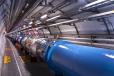
Two Australian science teachers will have the chance to participate in a special two-week summer school at the Large Hadron Collider in July 2026.
Seabird feathers
Advanced imaging reveals unusual, unseen patterns in seabird feathers.
A little bit of the moon just landed at ANSTO
Research on lunar meteorite and moon crater analogues coincides with Science Week.
Radiocarbon dating reveals past fall in sea level linked to changes on the Great Barrier Reef
Research confirms that echidnas and platypuses descended from an aquatic ancestor
A paper led by researchers at the University of New South Wales (UNSW) published in the PNAS last year has confirmed the theory that echidnas and platypuses descended from an aquatic ancestor with fossil evidence.