

Showing 21 - 40 of 108 results

Call for Proposals
Proposals at the Australian Centre for Neutron Scattering and National Deuteration Facility.
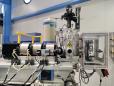
High-energy heavy ion microprobe
The high-energy heavy-ion microprobe is used for the characterisation or modification of material properties at depths from approximately 1 micrometre to maximum depths of up to 500 micrometres from the material surface.

User Meeting 2020 Invited Speakers
The User Advisory Committee (UAC) are pleased to present this year's invited speakers.

Connect with ANSTO's Women in STEM
Read about an ANSTO scientist and their work to prepare for a school project or interview.

Highlights - Aerosol Sampling
ANSTO has been tracking and publishing data on fine particle pollution from key sites around Australia, and internationally, for more than 20 years.

Role at ANSTO
Macromolecular crystallography continues to help elucidate complex protein structures
International collaboration uses cryo-electron tomography to determine the structure of a complex responsible for sorting and delivering cellular cargo.
Science talk: photonics to shine a new light on cancer treatment

Neutron Activation Analysis and Neutron Irradiation
Neutron Activation Analysis (NAA) is a highly sensitive method of quantitative elemental analysis. There is a wide range of potential applications for neutron irradiations.

Role at ANSTO

Role at ANSTO

About the ANSTO Hackathon
Progress on low energy electronics
Soft X-ray experiments used to characterise new thin film topological Dirac Semimetal.
Study of polar ice confirms carbon-climate feedback
Investigators have verified and quantified the relationship between the Earth’s land biosphere and changes in temperature and provided evidence that temperature impacts the cycling of carbon between land, ocean and the atmosphere.

Science Highlights - IMBL
A selection of research highlights, instrument news and technical developments for scientists.
Accelerator Systems Overview
Research sheds light on mechanism by which long-term anti-anxiety drug use affects the brain
ANSTO health researchers have contributed to an international study published in Nature Neuroscience that sheds light on the mechanism by which anti-anxiety drugs act on the brain which could lead to cognitive impairment in vulnerable individuals.

Role at ANSTO