

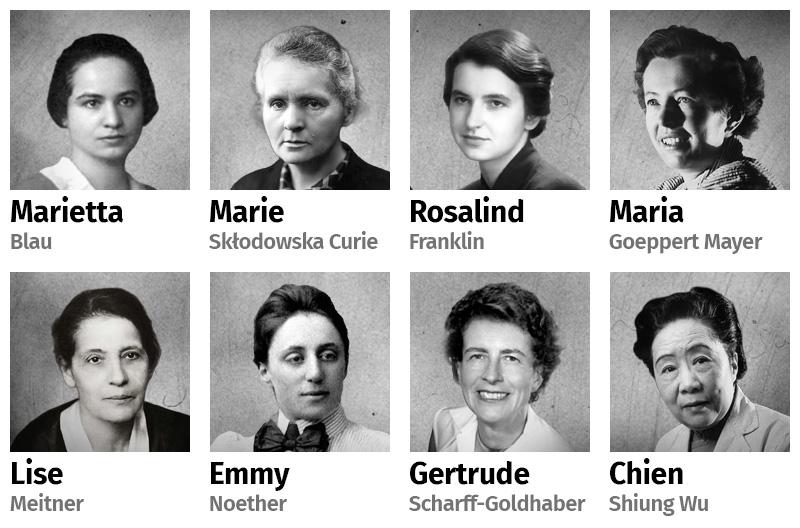
The physics and chemistry used at ANSTO is built upon, in significant part, by pioneering female scientists who were sidelined, expelled, or simply not credited appropriately for their achievements.
To acknowledge International Women's Day this month, we are providing short profiles of pioneers who faced historical challenges.
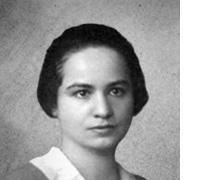
Marietta Blau spent fifteen years developing nuclear photographic emulsions, chemical films capable of recording and measuring the tracks of charged particles from nuclear reactions. She worked with manufacturers Agfa and Ilford to formulate emulsions sensitive enough to distinguish alpha particles from protons and to determine particle energies from track lengths measured under a microscope.
In 1937, she and Hertha Wambacher placed emulsion plates at an altitude of 2,300 metres on Hafelekar Mountain and discovered starbursts of particle tracks radiating from a single point, cosmic ray particles disintegrating heavy nuclei in the emulsion.
They named them Zertrummerungsterne (disintegration stars), and it was their discovery that launched particle physics. When they wrote up the result, her Nazi colleagues pressured her to list Wambacher's name before hers. Weeks later, the German annexation of Austria forced her out of the country.
Cecil Powell built on her technique, discovered the sub-atomic particle, the pion, and received the Nobel Prize in 1950. His Nobel lecture did not mention her contribution. The theoretical physicist Erwin Schrödinger nominated her for the Nobel multiple times. She spent her final years in Vienna in an unpaid position, analysing particle track photographs from CERN experiments, unable to afford health insurance. Her death in 1970 went unnoticed by the scientific community. Read more
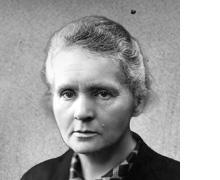
Marie Skłodowska Curie, more well known than other women in physics and chemistry, developed the radiochemical separation methods that made it possible to isolate individual radioactive elements from complex matrices, fractional crystallisation and precipitation from pitchblende ore. To isolate radium and polonium, she carried out this research in a leaking shed over four years.
The actinide separation chemistry in sample preparation for accelerator mass spectrometry (isolating uranium and plutonium isotopes at concentrations of one atom in a quadrillion) is descended from that historic methodological milestone. Although Marie Skłodowska Curie was awarded two Nobel Prizes, in Physics and Chemistry, the French Academy of Sciences still refused to admit her as a member. Read more
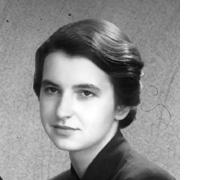
Rosalind Franklin developed the X-ray diffraction techniques that produced the experimental evidence for the double helix structure of DNA. Working at King's College London, she optimised humidity-controlled fibre preparation and long-exposure crystallography to obtain diffraction patterns of sufficient resolution to draw structural conclusions. Photograph 51, taken under her direction by Ray Gosling in 1952, showed the characteristic X-shaped diffraction pattern of B-form DNA. By early 1953 she had drafted papers concluding that both forms of DNA contained two helices.
Watson and Crick saw Photograph 51 without her knowledge, shown to them by her colleague Maurice Wilkins. Their double helix paper appeared in Nature in April 1953. Franklin's name was not on it. In 1962, Watson, Crick, and Wilkins received the Nobel Prize in Physiology or Medicine. Franklin had died of ovarian cancer in 1958, at thirty-seven. Nobel Prizes are not awarded posthumously.
Her earlier work, less discussed, directly underpins materials characterisation methods used across ANSTO: she spent three years at the British Coal Utilisation Research Association developing X-ray diffraction analysis of carbon microstructure, work that established the distinction between graphitising and non-graphitising carbons and shaped the field of carbon science. Read more
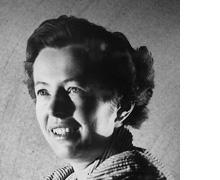
Maria Goeppert Mayer worked out why nuclei with 2, 8, 20, 28, 50, 82, or 126 protons or neutrons are exceptionally stable. She showed that these magic numbers reflect nucleons occupying discrete shells with strong spin-orbit coupling, in which a nucleon's orbital angular momentum and intrinsic spin interact to produce the observed stability pattern.
For years she carried out this work as an unpaid volunteer, barred from salaried positions by anti-nepotism rules because her husband held faculty appointments at the same institutions.
Mayer was affiliated with Argonne National Laboratory from 1946 to 1960. She worked as a senior physicist in the Theoretical physics division.
She received her first paid professorship in 1960 and won the Nobel Prize in Physics in 1963, the second woman to do so, fifty years after Curie. Read more
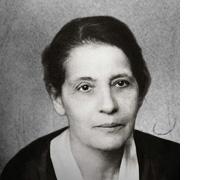
Lise Meitner fled Berlin in 1938, smuggled across the Dutch border by colleagues, after the Nazis' annexation of Austria, the Anschluss, stripped her of Austrian protection.
Working from exile in Stockholm, she and her nephew Otto Frisch provided the theoretical explanation for what Hahn had observed in their Berlin laboratory, that the uranium nucleus, bombarded with neutrons, splits into two smaller nuclei and releases an enormous quantity of energy.
She calculated the amount of energy released using Einstein's mass-energy equivalence, and she coined the word fission. Hahn published without her name. In 1944 he received the Nobel Prize for the discovery.
Meitner was nominated forty-nine times and never received one. She declined an invitation to join the Manhattan Project, "I will have nothing to do with a bomb."
Element 109 meitnerium is named after her. Read more
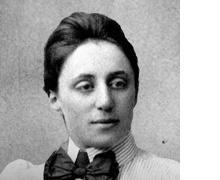
In 1918, Emmy Noether proved that every continuous symmetry of a physical system has a corresponding conservation law, and vice versa. Time-translation symmetry gives conservation of energy. Space-translation symmetry gives conservation of momentum. Rotational symmetry gives conservation of angular momentum.
The conservation laws that Noether derived form the mathematical skeleton on which accelerator beam optics, particle trajectory calculations, and detector signal interpretation are built.
When an accelerator scientist or researcher tracks a beam through a magnet lattice or interprets an ion's path using accelerator mass spectrometry, they are working with the framework that Noether formalised.
When she arrived at Göttingen in 1915, the faculty voted against permitting a woman to teach. The distinguished German mathematician David Hilbert responded with a logical retort, "I do not see that the sex of the candidate is an argument against her admission. After all, we are a university, not a bathing establishment."
She lectured for years under his name, received no salary until 1923, and was dismissed by the Nazis in 1933. She died in 1935, at fifty-three. Einstein wrote her obituary in the New York Times.
“Fräulein Noether was the most significant creative mathematical genius thus far produced since the higher education of women began.” Read more
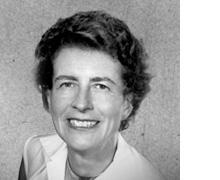
Gertrude Scharff-Goldhaber earned her PhD in physics from the University of Munich, fled Nazi Germany, and arrived in the United States to find the profession still largely closed to her. Her husband Maurice Goldhaber held a faculty position at the University of Illinois. Anti-nepotism rules barred the university from hiring her. She worked as an unpaid assistant in his laboratory for fifteen years.
In 1942 she demonstrated for the first time that uranium undergoing spontaneous fission releases neutrons along with energy. Those neutrons activate further nuclei, producing a cascading chain reaction. The data was directly relevant to achieving the first self-sustaining controlled nuclear reaction that same year.
She and her husband later confirmed that beta rays are electrons emitted from radioactive nuclei. In the 1950s she measured the energy of excited nuclei against neutron number and showed that shell structure peaked at the magic numbers, extending the standard nuclide chart and contributing to the modern nuclear shell model that Maria Goeppert Mayer was developing in parallel.
Her appointment at Brookhaven National Laboratory made her the first female physicist on staff there. It came fifteen years after she had finished her degree. Read more
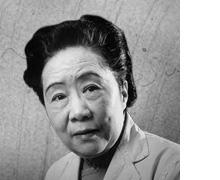
Chien-Shiung Wu designed and executed an experiment that overturned a fundamental assumption of physics. In the summer of 1956, Lee and Yang approached her with ideas for testing the directional properties of beta decay in cobalt-60. Wu understood the potential for a breakthrough and began work immediately, cancelling a planned trip to Geneva and the Far East with her husband.
The critical experiments were performed between Christmas and New Year's 1956. Her husband went to China without her. She stayed to run the experiment. As she later said: "This was a golden opportunity for a beta decay physicist to perform a crucial test, and how could I let it pass?"
She cooled cobalt-60 to 0.01 Kelvin, aligned the nuclear spins with a magnetic field, and measured the direction of beta emission, showing that electrons were emitted preferentially opposite to the spin direction, proving that weak interactions distinguish between left and right. Parity is not conserved. Two theorists, Lee and Yang, had proposed it might be worth testing. They took the Nobel.
Wu also redesigned Geiger-Muller counters during the Manhattan Project, significantly improving their sensitivity. Every radiation detector used at ANSTO was developed from that detection lineage. In 1975 she became the first woman president of the American Physical Society. Read more
Please note that this is not an exhaustive list, and there are many more important female scientists who have not been profiled.
The banner photograph is a shot of Maria Goeppert Mayer at Argonne National Lab from the Nobel Prize website.
Thanks to Dr Mitra Safavi Naeini for her contribution.


